


Yomif Kejelcha Is Building a GOAT Résumé — Olympic Marathon Gold and the World Record Could Complete It
A 3:47 miler became a world-class 5000m runner, then a 10,000m championship medallist, then a road world-record holder — and now he has run 56:51 for the half marathon and 1:59:41 for the marathon. Where exactly does Yomif Kejelcha’s range end?
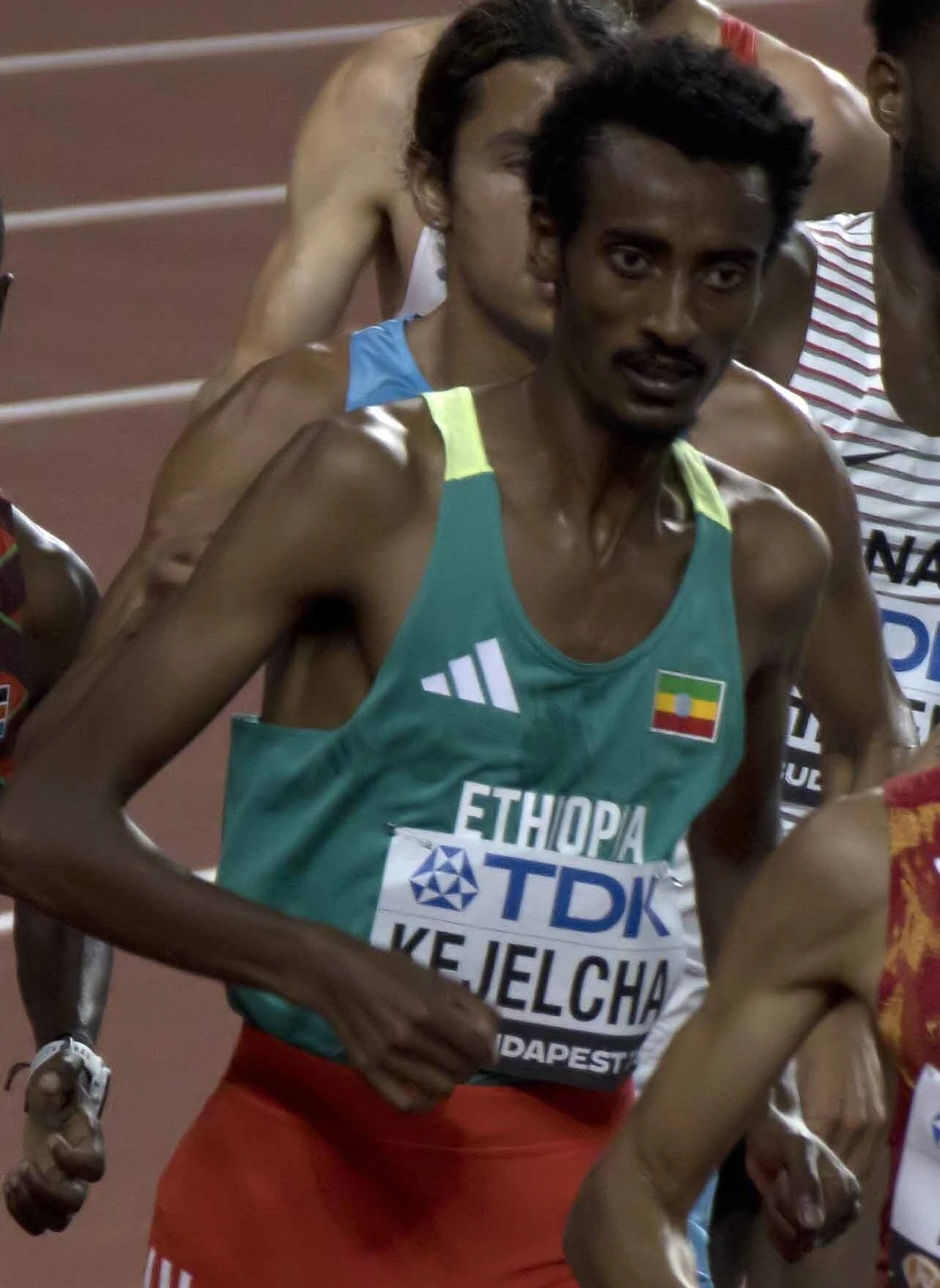
There are world records that feel like a runner squeezing a few seconds from the limits of an event.
And then there are performances that make you reconsider what kind of athlete you are actually watching.
Yomif Kejelcha’s 56:51 in the Buenos Aires Half Marathon belongs in the second category.
The Ethiopian did not merely reclaim the half-marathon world record. Subject to ratification, he took the distance into completely new territory and did it only four months after running 1:59:41 in his first marathon.
That London performance made him the fastest marathon debutant in history and the second-fastest marathon runner ever.
Now add this: Kejelcha is also the current world record-holder for the road 10km at 26:31.
And before he became one of the greatest road runners alive, he was the man who ran 3:47.01 for the indoor mile — a world record at the time.
Mile speed to sub-two-hour marathon ability.
That is why the conversation around Kejelcha has changed.
The Numbers Behind Kejelcha’s 56:51
The remarkable thing is where the record was actually made.
Kejelcha did not attack the opening kilometres as if he was desperate to bank time.
His first 5km took 13:44. He reached 10km in 27:18.
Then the race changed.
| Section | Split | Cumulative |
|---|---|---|
| 0–5km | 13:44 | 13:44 |
| 5–10km | 13:34 | 27:18 |
| 10–15km | 13:21 | 40:39 |
| 15–20km | 13:23 | 54:02 |
| Final 1.0975km | Approx. 2:49 | 56:51 |
He Did Not Break the Record in the First 10km
This is what makes the performance so interesting from a coaching and physiological perspective.
Kejelcha resisted the temptation to chase the clock immediately.
The opening 10km in 27:18 was extraordinary by any normal measure, but relative to world-record half-marathon running it was controlled.
Then he covered the next five kilometres in 13:21.
Read that again.
After already running 10 kilometres at approximately 27-minute pace, he accelerated to 13:21 for the next 5km.
The following five kilometres were barely slower: 13:23.
Between 10km and 20km, Kejelcha essentially produced a 26:44 10km in the middle of a half marathon.
That is where Buenos Aires was won.
ITC Analysis: Why the Record Happened
1. He Was Patient
World-record attempts often die because athletes fall in love with early splits.
Kejelcha did the opposite. He allowed himself to arrive at 10km with enough physiological control to accelerate rather than simply survive.
2. His Speed Reserve Is Almost Absurd for a Road Runner
Kejelcha once ran 3:47.01 for the indoor mile.
Jakob Ingebrigtsen has since broken that world record, but Kejelcha’s former mark remains extremely important when trying to understand this athlete.
Very few marathoners in history have possessed that kind of genuine middle-distance speed.
3. His Aerobic Range Has Expanded Without Destroying His Speed
Many track athletes move to the marathon because their track speed has begun to decline.
Kejelcha’s transition looks different.
He brought his track engine with him.
The result is an athlete capable of racing 5000m and 10,000m at the highest level, running 26:31 on the road, 56:51 for the half marathon and 1:59:41 over 42.195km.
4. He Was Essentially Running Alone
Kejelcha separated from his principal rivals relatively early and eventually turned much of the decisive second half into an individual effort against the clock.
That matters.
There was no large pack carrying him through the decisive kilometres. The record increasingly became a test of rhythm, economy and belief.
What About Jacob Kiplimo’s 56:42?
This is going to confuse people looking at the all-time lists.
Jacob Kiplimo ran an astonishing 56:42 in Barcelona in February 2025.
But the performance was not ultimately ratified as the official world record under World Athletics requirements.
Kiplimo later ran 57:20 in Lisbon, another major record-level performance.
Kejelcha has now produced 56:51 in Buenos Aires, putting the official record conversation back into extraordinary territory.
Kejelcha’s Career Is Much Bigger Than One Road Record
Imagine Kejelcha’s résumé if the next chapter contains two things: the marathon world record and Olympic marathon gold.
He would have world-class history from the mile through 42.195km, global track titles indoors, outdoor World Championship medals, road world records, a sub-two-hour marathon and the biggest championship title available on the road.
More importantly, if his road records remained in place when he broke the marathon record, he could own historic standards across 10km, half marathon and marathon.
Why Olympic Marathon Gold Matters So Much
There is one obvious hole in Kejelcha’s résumé.
Outdoor championship gold.
He has come painfully close.
Joshua Cheptegei beat him to the 2019 world 10,000m title. He has also accumulated another global 10,000m silver medal since.
At the Olympics he has finished seventh and sixth.
Those results are outstanding, but distance-running immortality is measured partly by medals, not just stopwatches.
That is why an Olympic marathon victory would change how his career is viewed.
Suddenly Kejelcha would not simply be one of history’s greatest time-trial athletes.
He would have conquered the most famous championship distance in the sport.
Then There Is the Marathon World Record
And unlike an Olympic gold medal, this target already looks frighteningly realistic.
The marathon world-record standard is now below two hours.
Kejelcha has already run 1:59:41.
On his first attempt at the marathon.
That is the part that should make every marathon fan pay attention.
Kejelcha now has the experience of one marathon build, one marathon fueling plan, one encounter with the final 10 kilometres and one opportunity to understand exactly how his body responds beyond 35km.
It is difficult to believe that 1:59:41 represents the final limit of his marathon career.
Would That Make Kejelcha the Greatest Distance Runner Ever?
That question will never have a completely objective answer.
Kenenisa Bekele has Olympic track titles, world championships and extraordinary records.
Haile Gebrselassie dominated both track and road across generations.
Eliud Kipchoge won two Olympic marathons and changed the history of marathon running.
Joshua Cheptegei produced world records and major championship titles over 5000m and 10,000m.
Those careers cannot simply be erased by one number.
But Kejelcha is building something different.
Range.
Genuine mile speed.
World-class 3000m ability.
A 12:38 5000m.
A 26-minute-level 10,000m track career.
A world record over 10km on the road.
A world-record-level half marathon.
And already one of the fastest marathons ever run.
If Olympic marathon gold and the marathon world record are eventually added to that list, the argument changes from:
“Is Kejelcha one of the greats?”
to:
“Has anybody ever demonstrated this much elite range across the entire distance-running spectrum?”
At 29, There Is Still Time
Kejelcha is now entering an age at which many of the greatest marathoners produce their strongest performances.
That matters because road runners frequently peak later than track athletes.
He has spent more than a decade building the speed, economy and aerobic capacity that are now appearing together in the marathon.
Los Angeles 2028 could arrive during what should still be a prime marathon period for him.
The challenge of even making Ethiopia’s Olympic marathon team will be immense.
Winning it would be harder still.
But after watching a former 3:47 miler run 56:51 for a half marathon and 1:59:41 for a marathon, there is very little left about Kejelcha that sounds impossible.
The Most Remarkable Thing Is the Journey
Kejelcha was once viewed primarily as a track runner.
Then he became a 10,000m runner.
Then a half-marathon world-record holder.
Then a marathoner.
Now he has become difficult to categorize at all.
Perhaps that is ultimately what makes this stage of his career so interesting.
We already know what a great miler looks like.
We know what a great track distance runner looks like.
We know what a great marathoner looks like.
Kejelcha is trying to become all three in the same career.
And after 56:51 in Buenos Aires, the possibility no longer sounds ridiculous.
World Athletics athlete records, championship results and road-running record information; Buenos Aires Half Marathon race reporting; London Marathon results; World Athletics road 10km record information.
Today’s 56:51 half-marathon performance remains subject to the normal World Athletics ratification procedure. Split information reflects race and broadcast reporting available immediately after the event.